


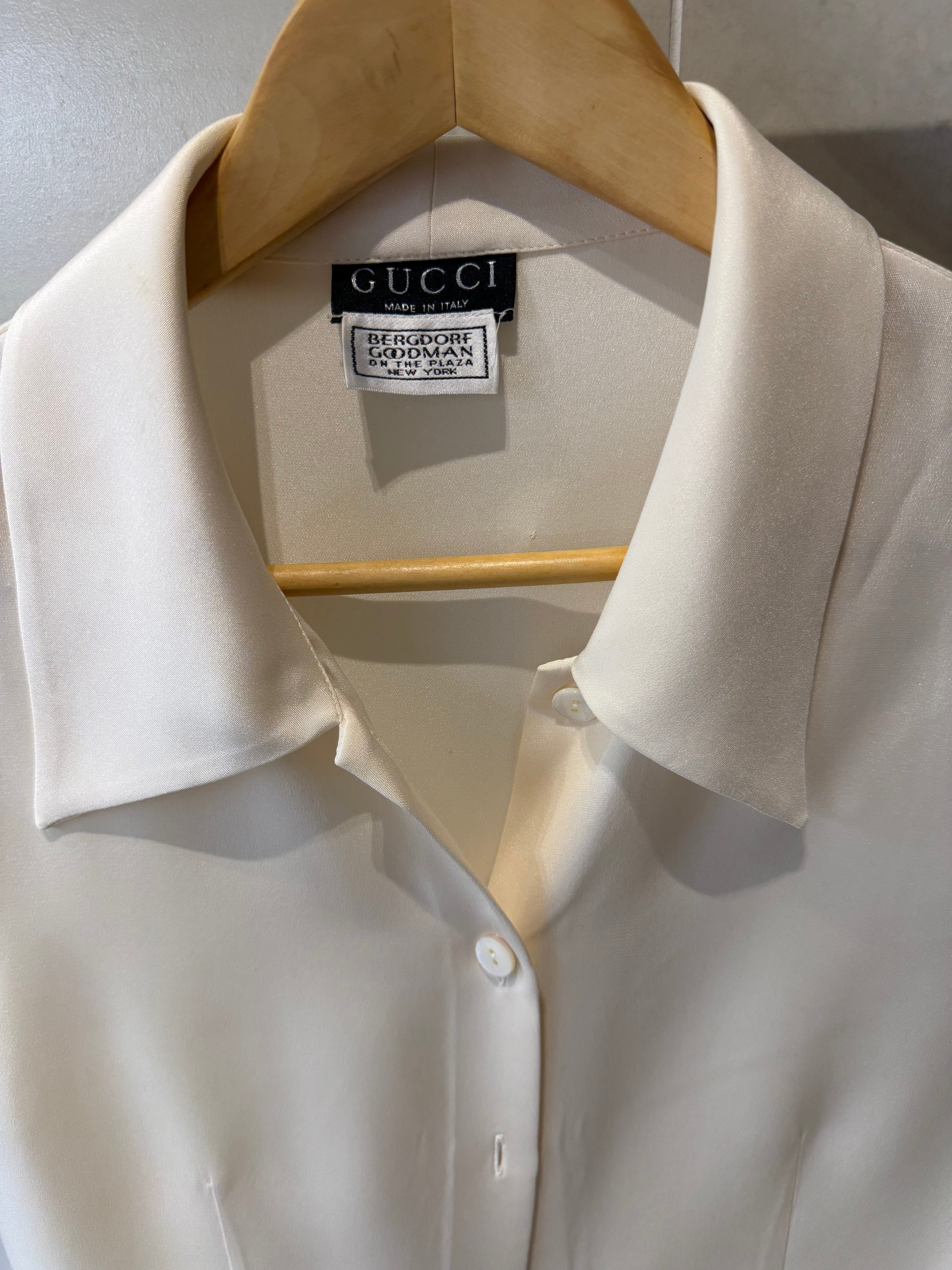
A shirt to be a diva in.
I love a diva. I mean a proper one. A grand dame. A slasher of tires, thrower of plates. Imperious and exacting, a sensualist of the highest order and, crucially, in possession of some kind of transcendent talent. I was listening to The New Yorker’s The Critics at Large podcast this week on exactly this. It started with a quick fire round of diva or not. Susan Sontag? Diva. Maria Callas? OBVIOUSLY a diva. Norman Mailer? Just an arsehole. As one very funny woman I met at a lunch earlier this year posited: are you a diva or are you just difficult? It’s worth asking yourself. You’ve got to have the goods to get away with it! People tire of difficult.
While a colleague (the inimitable Natalie Reilly in fact, who just launched her own Substack and whose office hot takes I miss enormously) once described me as a sensualist, alas, I will never be a diva. I am too much of an elder millennial accommodating people pleaser! I do love lolling about reading and eating oysters and drinking good champagne though. But I have been thinking this week about how qualities of the diva - a sensualist approach to life (my favourite Nigella Lawson saucily dipping her finger into the custard etc) and straight-up hedonism is a nice counter balance to insidious wellness culture and the loss of appetite, all kinds of it. This is one of the many pages I dog-earred in Helen Garner’s How to End a Story (a book I have found personally transcendent), a line from Peter Craven on ‘the deep moral value of fun.’ Fun, right now in short supply, feels profound.
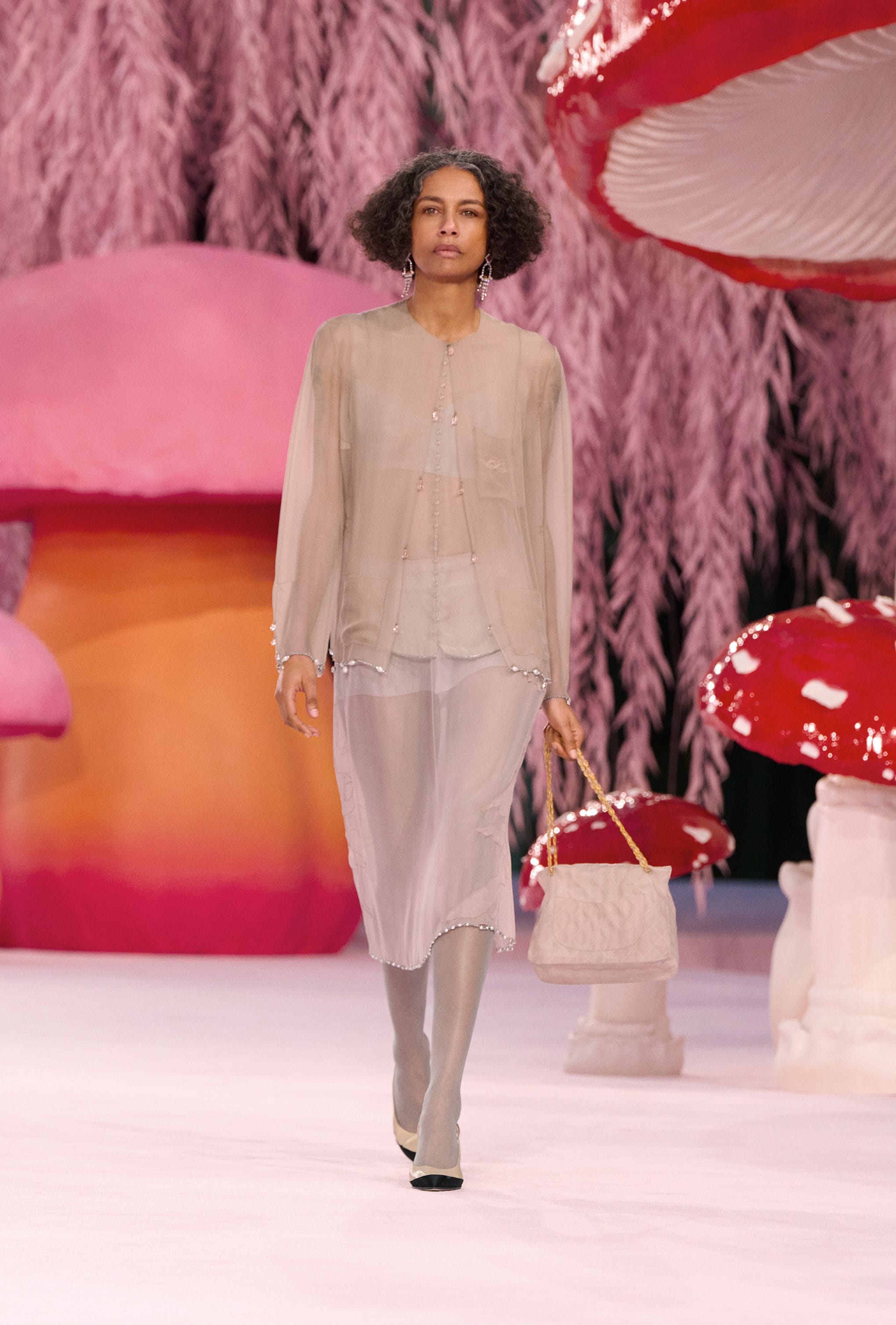
Beautiful older models at Chanel, women who Matthieu Blazy says, ‘have life.’ Image: courtesy of Chanel
Anyway, the matter of being a woman in Garner’s diaries hit me hard - nobody is a closer observer of others, or herself. This includes her own ageing. This is another thing I have been thinking about. Like everybody else, I noticed, and then felt depressed for noticing, women’s faces on screen that look like they’re meant to. Women like Claire Danes in the horrifically scary (had to watch with my hands over my face) The Beast in Me and Kerry Russell in The Diplomat and Emilia Clarke in Ponies. Faces that emote and move and crinkle. I love their faces (and yes, they’re all in possession of more beautiful faces than most, but that’s not my point!). And I loved the casting at Matthieu Blazy’s first haute couture show, the first model in her ’40s and then enough of them that as Vanessa Friedman put it in The New York Times, “to make it clear they weren’t tokens.”
Backstage Blazy said of his beautiful, light-as-air collection, “Women who are more mature bring a completely different dimension to my clothes.”
“They have life; they’ve seen the world.”
This is a paragraph that I loved in Zadie Smith’s essay on ‘Agelessness’ a word or a mode of being that has, somehow, become the thing prized more than anything above all. What a useless folly!
“It is commonly thought that time is the particular enemy of women. Because we supposedly have so much to lose: our ‘looks’, our fertility, our cultural capital. There have been feminist modifications to this story over the years, but it remains powerful: a tale long told by men and subsequently retold and internalised by women.”
“But there are other ways of looking at it. That women have timepieces built into their bodies—primarily ‘biological clocks’ and the menopause—signs that must eventually be heeded, signs that are, finally, impossible to ignore, seems to me at least as much gift as curse. That our bodies should bring us such concrete signs of time passing—that they should have the miraculous ability to bring us news of what is actually the case—surely means that every woman is offered the opportunity to be, as Young Disciples have it, a “conscious observer” of her own life.”
I think this is why I so loved Helen Garner’s diaries. She observes, and this includes her ageing. Not even HG or Zadie Smith are immune to the way the world wants us to feel about ageing. But what if you grab at life and ageing is the reward? Most of us know that not all of us get this privilege. And what a privilege it is. Life is for sucking the marrow, when you can. You want to be a woman who has life.
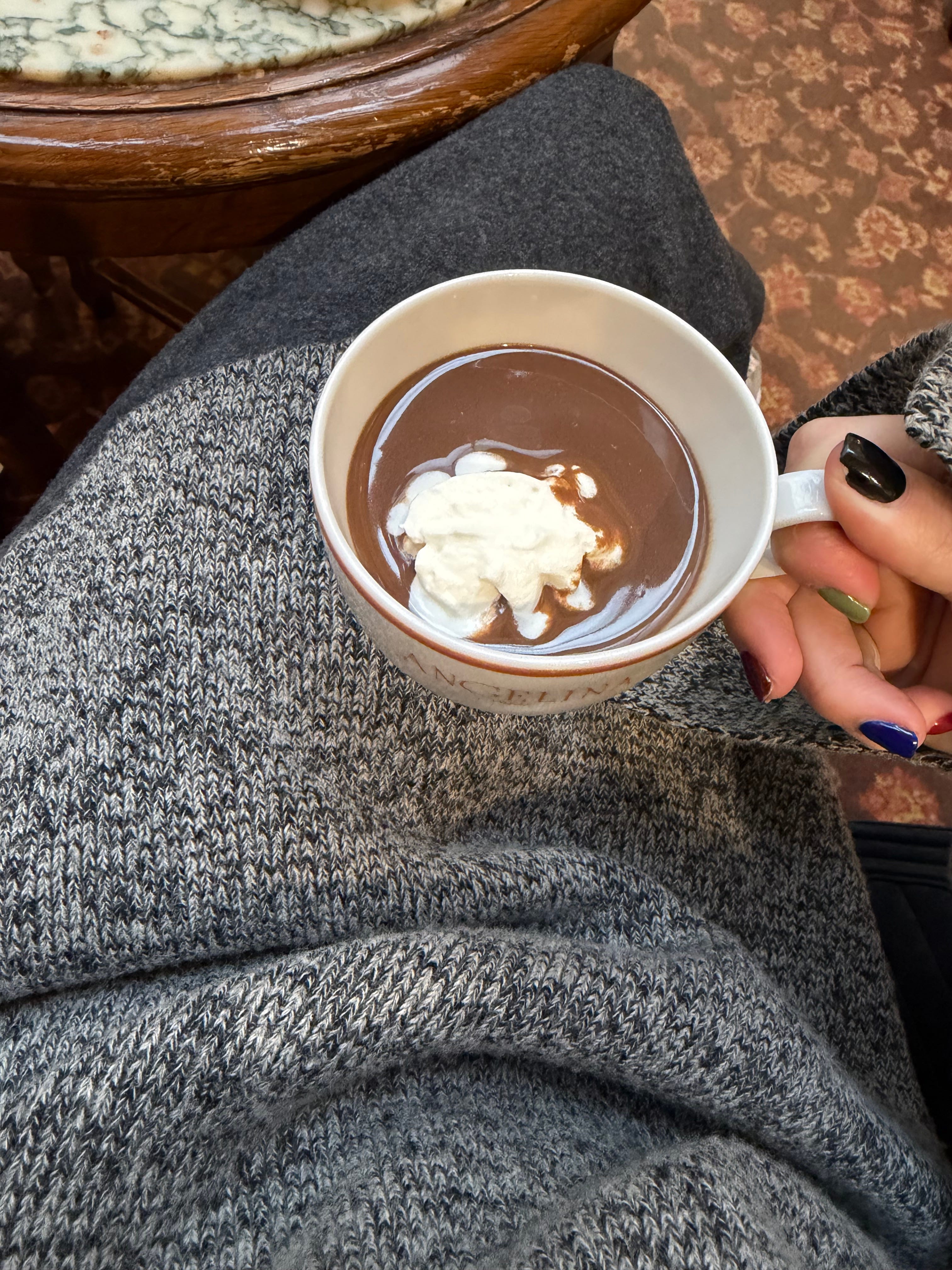
On the topic of indulgence, I was in Paris for work last week and there was no line at Angelina’s (?!) so I had a hot chocolate with cream.
[And speaking of my own personal hedonism, have decided my only goal for 2026 is to go to more oyster happy hours - a pure, time sensitive pleasure!].
[I also found a Tom Ford - i.e. sensuality king - era Gucci silk shirt on The RealReal that I plan to wear as often as possible. Slink is a virtue!]
BOOKS
Obviously I cannot recommend Helen Garner’s Collected Diaries enough, I think they should be required reading for all women - whatever age.
I also inhaled Zadie Smith’s latest essay collection Dead and Alive.
Love,
Annie xx